
Emese Kádár – The Unrisen Sun
2026. Jun. 21. - 2026. Sep. 06.
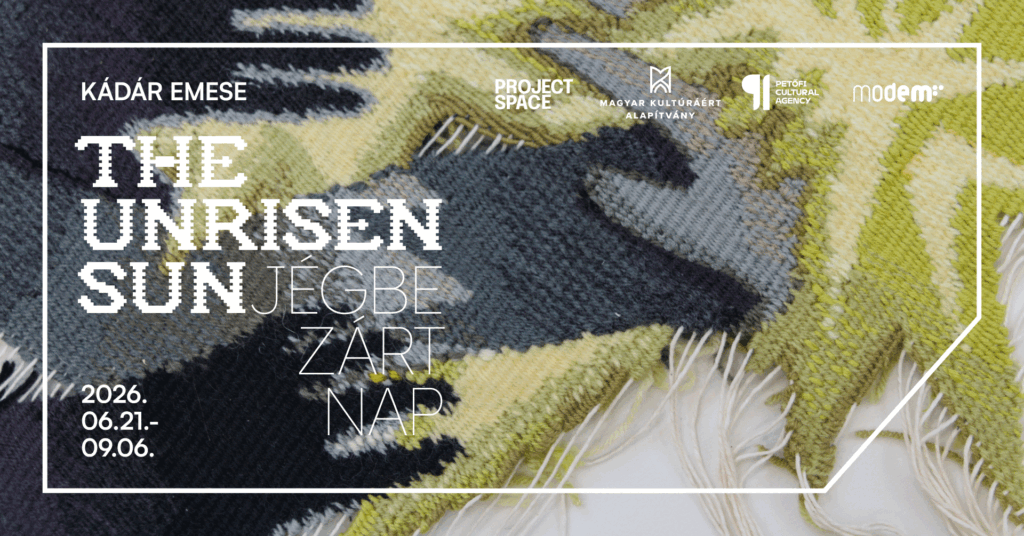
At her solo exhibition, the Debrecen-born artist, Emese Kádár continues the investigation of how experiencing grief can find its way in contemporary culture. While she previously engaged with present-day rituals of mourning through the lens of accessing digital memories, her new series approaches the theme in a more poetic manner.
Her newest works were inspired by a summer visit to a cemetery: the bright sunshine of the blistering July heat formed a stark contrast with the frozen state of mourning. The works exhibited in The Unrisen Sun were distilled from this experience and lead us into a simultaneously freezing and warming landscape, the tension-filled phase of grief, where the seemingly antagonistic desire to preserve memories while also letting the hurt go is in a constant battle.
The exhibition is a symbolic phantom world, an arctic sunrise frozen in a state of timelessness, where the spheres of ice and sun appear as projections of the subconscious. Here, thawing, as a herald of spring, often symbolizing the beginning of something new, is not, in fact, liberating. The illuminating power of sunlight, which could flash the possibility of confrontation and moving forward, blinds with its intensity instead of functioning as a guiding light. It flickers as a sun ghost, long after we close our eyes following a glance into the light.
In the series presented in MODEM Project Space, alongside the woven textiles Kádár experimented with the technique of needle felting, and in her motifs she blends the emblems of digitally preserved memories with frozen natural elements and the symbols of mourning rituals. The conceptual fabric of her works is also interwoven with questions of collective data storage: the data centers buried in the permafrost of Svalbard preserve our digital heritage below freezing point, hence the example of these ice-locked servers provide a chance to reflect — both globally and personally — on which memories are worth burying underground, and what might be better brought to the surface, to let it thaw and eventually be released?
Curator: Vanda Sárai