Description
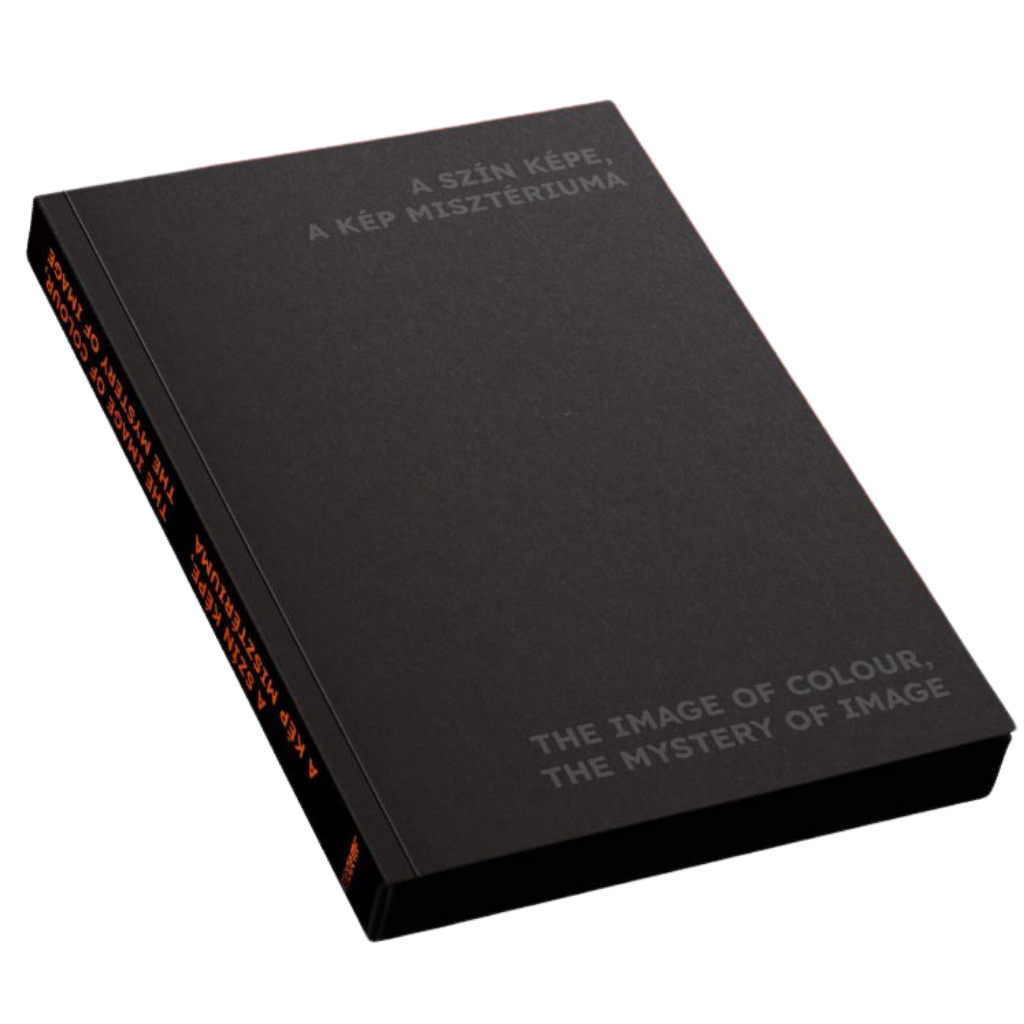
MODEM’s current exhibition, The Image of Colour, the Mystery of the Image, presents a comprehensive selection of monochrome paintings from the Antal–Lusztig Collection, one of Hungary’s most significant private art collections. Its owner, Dr Péter Antal, began acquiring monochrome paintings in the mid-2000s. Now comprising more than five hundred works, they form a distinct section of his collection. Over the past decades, selections of varying sizes have appeared in numerous exhibitions in Hungary and abroad. Yet this body of work has never been shown in its entirety. Its significance lies, in part, in the exceptional commitment of its collector: thanks to his dedication, the spirit and legacy of monochrome painting remain present in Hungarian art discourse, both through individual artists’ sustained practices and through the press coverage accompanying exhibitions drawn from the Antal–Lusztig Collection. This helps sustain an ongoing discussion of the subject and firmly establishes Hungarian monochrome painting within its historical and international context.
In 1978, Marcia Hafif, one of the foremost representatives of monochrome painting, published her seminal essay Beginning Again, in which she deconstructed the medium of painting by tracing its historical precedents. She proposed that, in order to begin painting again, we must examine the statements made by Rodchenko, Malevich, Strzemiński, Barnett Newman, Mark Rothko, Ad Reinhardt and others concerning the end of painting. A moment had arrived when, as she wrote, “painting as an endeavour had become questionable and had been placed ‘under erasure’.” One possible response was for “artists who were still interested in painting to begin analysing it and return to the fundamental question of what painting is”—not to define painting, but to breathe life into it by starting all over again.
Building on Marcia Hafif’s theoretical propositions, Joseph Marioni, one of the best-known American monochrome painters, described monochrome painting as a “movement” best understood as a twentieth-century investigation into the defining principles of painting. As such, it enabled painters committed to monochromy to bring together the lessons of their predecessors and a fundamental examination of painting itself. Taking painting’s material components as their starting point while moving beyond abstraction, the artists associated with this investigation established new foundations for the relationship between painting (image) and viewer, redefined the conceptual pairing of painting (image) and object, and, above all, freed the materiality of paint from the centuries-old constraints of representation.
Organised into 7+1 distinct sections, this exhibition of works selected from the monochrome holdings of the Antal–Lusztig Collection guides visitors along a route that is both physical and imaginary. Beginning with the material components of painting, it follows the investigations of monochrome painters through seemingly self-evident concepts such as gesture, pictorial space, the boundaries of the image and its layers. The works by Hungarian and international artists assembled in each section do more than enrich our understanding of these concepts. They also bring us closer to the mystery of painting through which, once the material of paint had been liberated, a particular type of portrait could emerge: one that depicts the image of colour.
Most of the painters represented in the individual sections are concerned with the self-referential conditions of painting. The visual language of monochromy offers the surest ground for their investigations, allowing them to reject radically both the communication of messages and the presentation of narrative content. Through monochromy, the proponents of Radical Painting focus on the structural examination of the painting and its support, while also emphasising colour and the painting’s character as an object. They treat colour as an autonomous entity, distinct from any surface or form, and present this independent entity to the viewer through the possibilities offered by the physical dimensions of the pictorial object, existing for its own sake.
Curator: Mónika Zsikla
Artists: Marcus ABEL / Giuseppe AMADIO / Anne APPLEBY / Bernard AUBERTIN / César BALDACCINI / Torie BEGG / Hagan BENGTSSON / András BERNÁT / Alfonso FRATTEGIANI BIANCHI / Bram BOGART / Alan CHARLTON / Philippe CHITARRINI / Christiane CONRAD / Szilvia CSEH / Christoph DAHLHAUSEN / Rudolf de CRIGNIS / Alec De BUSSCHÈRE / Gioppe DI BELLA / Arturo DI MARIA / Hadrien DUSSOIX / Gábor ERDÉLYI / Helmut FEDERLE / Gyula Zoltán FELEDY / Árpád FORGÓ / Rossella FUMASONI / András GÁL / Jakob GÄSTEIGER / Johannes GECCELLI / Alex GERN / Ludwig GERSTACKER / Johannes GIRARDONI / Raimund GIRKE / Kuno GONSCHIOR / István HAÁSZ / Marcia HAFIF / Simon HANTAÏ / Herbert HAMAK / Tamás HENCZE / René HERAR / Manfred JÄGER / Jeong Sook AHN / Dorothae JOACHIM / Zebedee JONES / Jus JUCHMANS / Katalin KÁLDI / Zsigmond KÁROLYI / György KEPES / Imi KNOEBEL / Hartwig KOMPA / Marie Joe LAFONTAINE / Edwina LEAPMAN / Ciarán LENNON / Sol LEWITT / Erik LINDMANN / Omar LUDO / James LUMSDEN / Vincent MARRAS / Jason MARTIN / Pierro MANZONI / Umberto MARIANI / Joseph MARIONI / Ingo MELLER / Jürgen MEYER / Vera MOLNÁR / Kiminori MIZOBE / A. Paola NEUMANN / Hermann NITSCH / Gunnar OKNER / Gianluca PATTI / Thomas PHIL / Gyula PAUER / Frank PIASTA / Alfredo PIRRI / Paul RAGUÉNÈS / Jochims RAIMER / Dirk RATHKE / Gerhard RICHTER / Rene RIETMEYER / Perry ROBERTS / Rolf ROSE / Arnulf RAINER – Dieter ROTH / Michael RÖGLER / Yuko SAKURAI / Constanze SCHWEIGER / Phil SIMS / Tamás SOÓS / Andre STEMPFEL / Judit REIGL / Rudy STANZEL / Róbert ŠWIERKIEWICZ / Dezső SZABÓ / Kata SZALAI / Barbara SZLÁVIK / Cedric TEISSEIRE / Heiner THIEL / Irene THOMET / Frederic Matys THURSZ / Peter TOLLENS / Jorrit TORNQUIST / Zoltán TÖLG-MOLNÁR / Lee UFAN / Günther UMBERG / Gabi VARGA / Dieter VILLINGER / Winfried VIRNICH / Icke WINZER / Duane ZALOUDEK / Herbert ZANGS / Jerry ZENIUK / John ZINSSE
The catalogue can be ordered by emailing jegypenztar@modemart.hu. Please include:
Your preferred method of receiving the order: free collection from MODEM during opening hours, or delivery to your specified address following advance payment by bank transfer.
Your name, contact details (email address or telephone number) and billing address.
The title of the catalogue and the number of copies required.